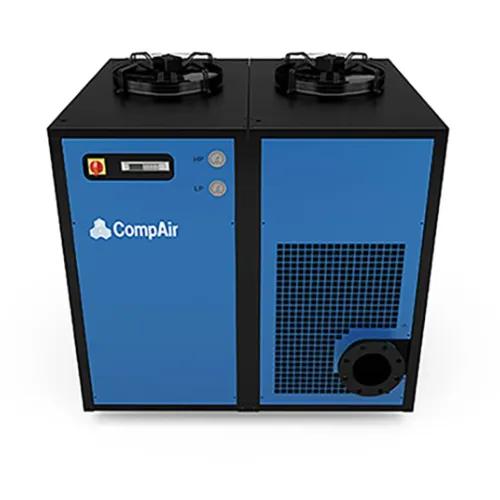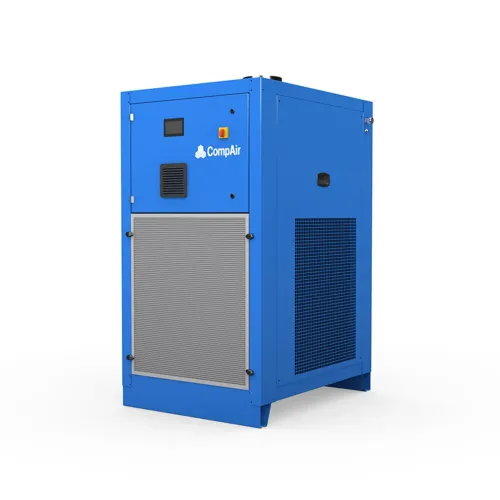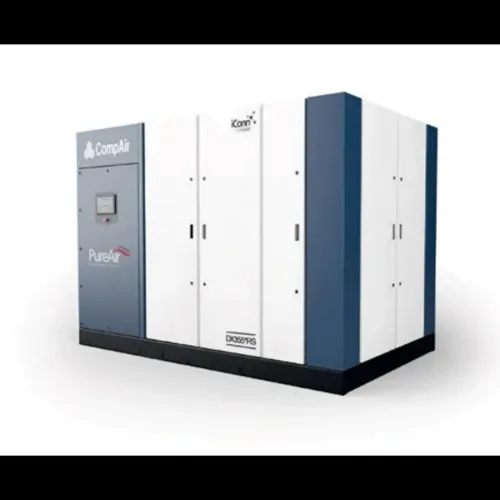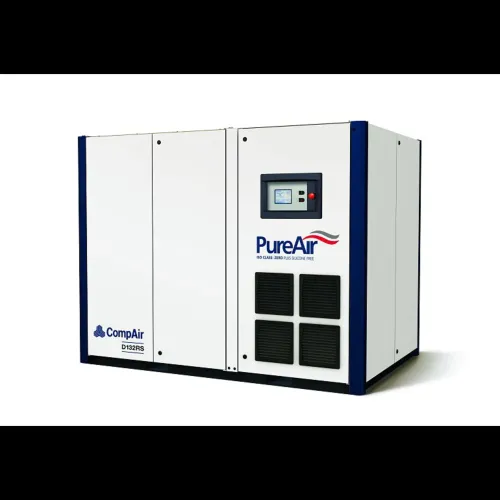
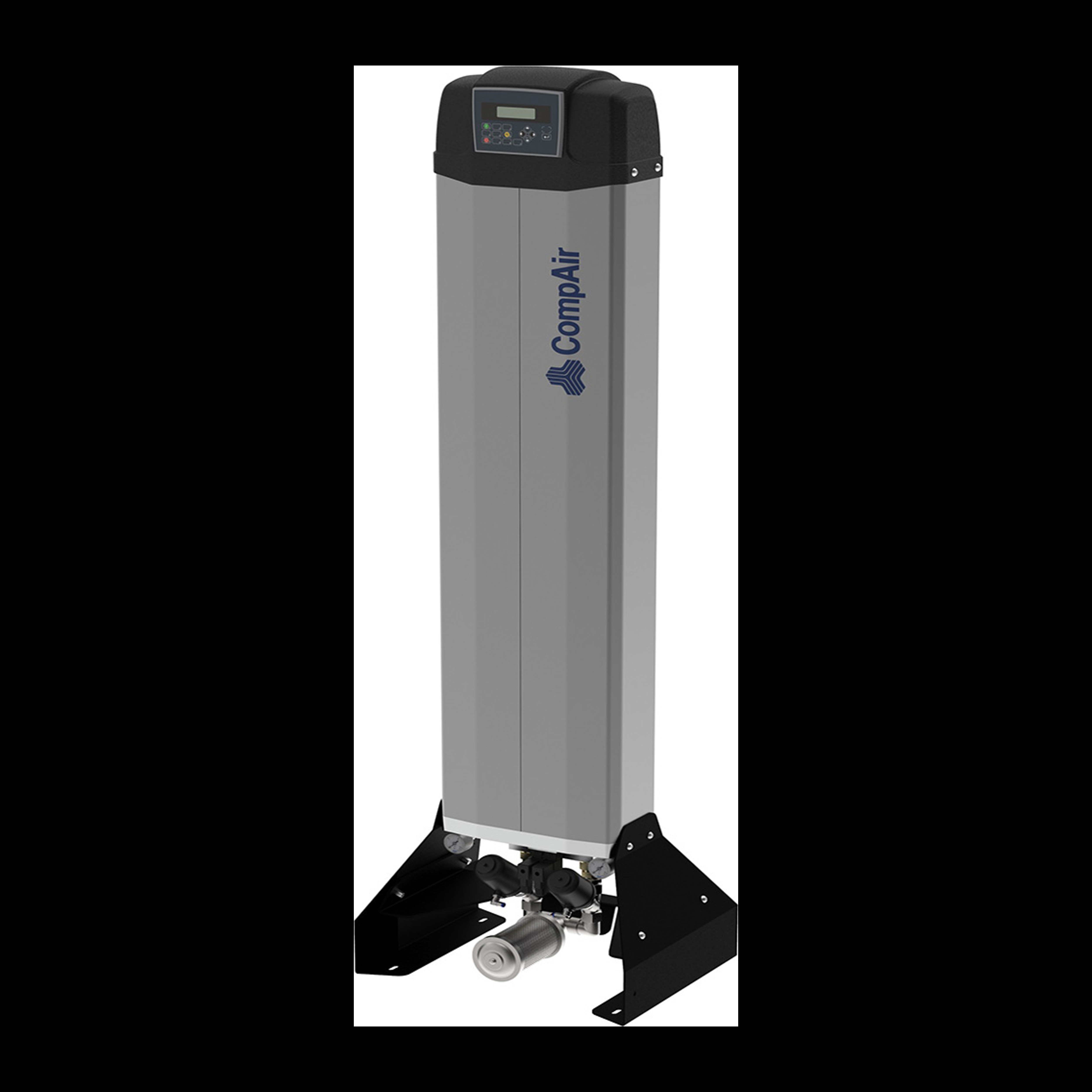
Compressed Air Dryers
Desiccant Air Drying Technologies
Modular Desiccant Dryers
High-performance desiccant air treatment
By combining the proven benefits of desiccant drying with modern design, CompAir provides an extremely compact and reliable system to dry and clean compressed air efficiently.
The CompAir A-Series of heatless regenerative desiccant dryers have proven to be the ideal solution for many thousands of compressed air users worldwide in a wide variety of industries.
High Air Quality:
Delivers ISO Class 2 or Class 1 pressure dew point air for critical applications; high efficiency pre and post-filters provide constant high air quality, protecting downstream air from contamination.
Superior Reliability:
Proven electronic control performance indicators, extruded aluminium with anodisation and epoxy painting, and NEMA 3/IP54 Protection (also suitable for outdoor installation) make desiccant dryers durable and high-strength.
Total Cost of Investment:
Reduced cost of ownership with point of use design to treat only the required air, conservative pressure drop 0.2 Barg, and purge reduction on compressed air demand (on/off-load).
Ease of Use:
User-friendly electronic interface with alarm indicators available for models 40 and above.
Serviceability:
Modular dryers feature an optimised design for simplified maintenance and preventative maintenance alerts (models 40 and above).
Compact & Flexible Solution:
Space-saving design for optimised installation with air inlet and outlet in the back of unit and connection piping can come from right or left. Model up to 0.42 m3/min can be wall-mounted or installed horizontally
Performance Improvement:
Extended rated pressure range from 4 to 14 Barg and increased airflow range coverage up to 300 m³/h. Guaranteed class 2 (-40°C) and optionally class 1 (-70°C) pressure dew point.
1. Compressed Air Dryers
Compressed air dryers are systems designed to remove water vapor from compressed air. Moisture can cause corrosion, freezing, and damage to pneumatic tools or processes.
Main Types:
Refrigerated Dryers
Cool air to condense and remove moisture
Cost-effective and low maintenance
Typical dew point: ~3°C
Desiccant Dryers
Use adsorbent materials to remove moisture
Achieve very low dew points (-40°C to -70°C)
Membrane Dryers
Use selective membranes to separate moisture
Compact and no electricity needed (in some designs)
Why They Matter:
Prevent rust and corrosion
Improve product quality (especially in food/pharma)
Extend equipment life
2. Desiccant Air Drying Technologies
These are advanced drying systems using adsorption (not absorption) to remove moisture.
How It Works:
Moist air passes through a bed of desiccant material like:
Activated alumina
Silica gel
Molecular sieves
The desiccant adsorbs water vapor onto its surface.
Common Technologies:
Heatless (Pressure Swing Adsorption - PSA)
Uses dry air to regenerate desiccant
Simple but less energy efficient
Heated Desiccant Dryers
Use external heaters for regeneration
Lower air loss, better efficiency
Blower Purge Dryers
Use ambient air + heater for regeneration
Most energy-efficient for large systems
Key Advantages:
Extremely low dew points
Suitable for critical applications (electronics, pharma, painting)
3. Modular Desiccant Dryers
These are a newer, more flexible version of traditional desiccant dryers.
What Makes Them “Modular”:
Built from multiple smaller drying columns (“modules”)
Airflow is distributed across modules
System adjusts capacity based on demand
Benefits:
Energy Efficiency
Only active modules operate → reduced energy use
Scalability
Add/remove modules as needed
Redundancy
If one module fails, others continue working
Compact Design
Easier installation in tight spaces
Typical Use Cases:
Industrial plants with variable air demand
Modern automated systems
Facilities aiming to reduce energy costs