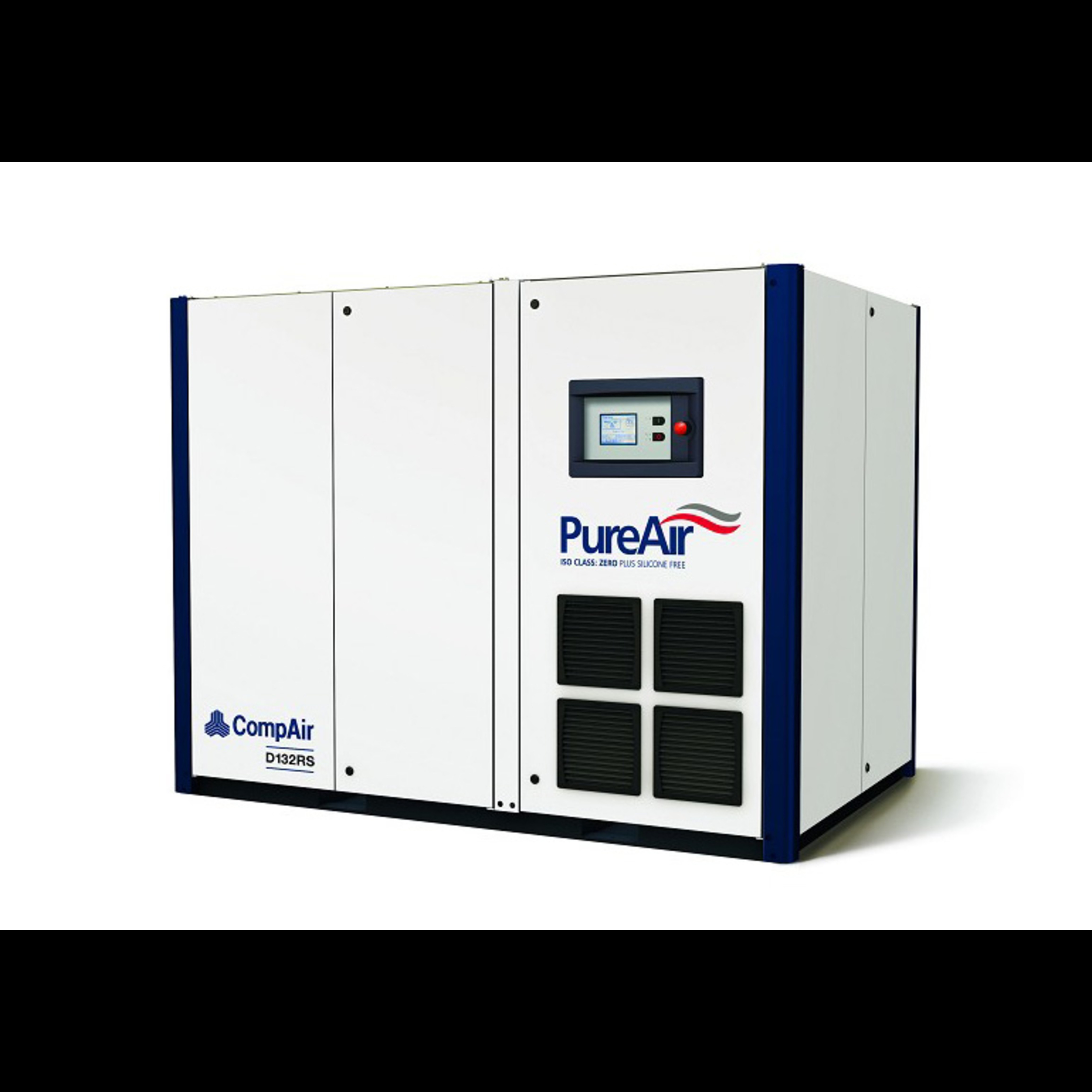
Oil Free Air Compressors: Best Choice for Pure Air
Two Stage Oil-Free Rotary Screw Compressors
Fixed and regulated speed rotary screw air compressors
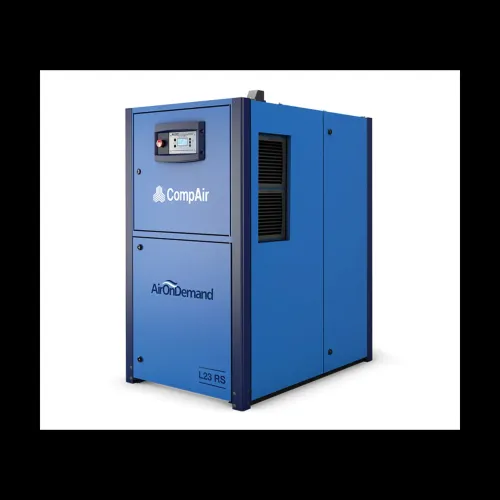
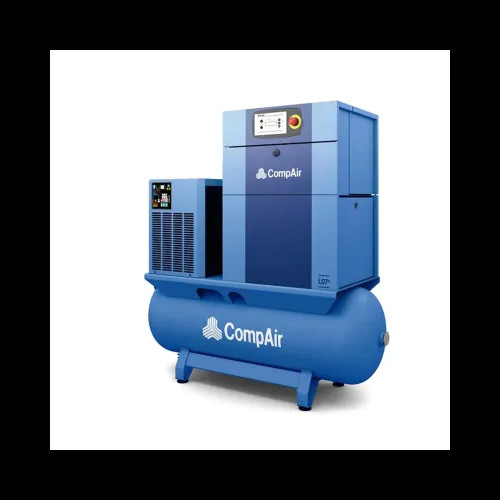
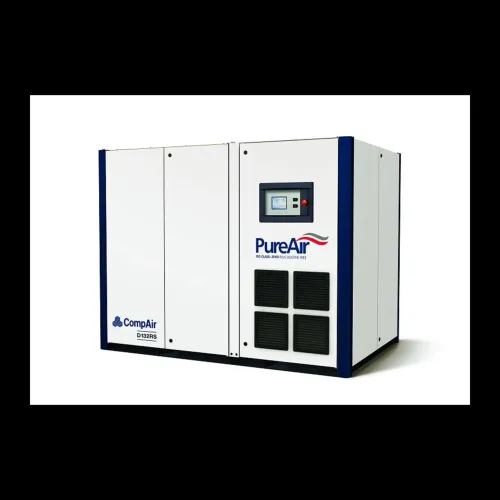
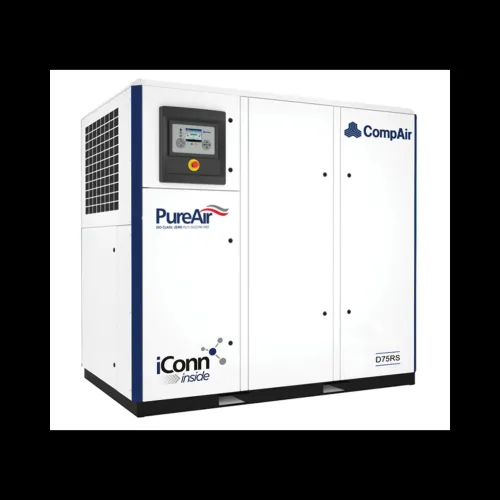
The launch of this brand-new range of oil-free screw compressors offers the lowest total cost of ownership on the market, with up to 8% higher flow rates, up to 7% energy reduction and guaranteed air purity. These high output oil-free machines now cover a wide flow range from 14.6 to 28.3 m³/min. The DX90 to DX160 models are fixed speed and the DX90RS to DX160RS models are regulated speed.
Pressure range: 4 to 10.7 bar
Volume flow: Capacity of 6.7 to 28.3 m³/min
Motor power: 90 to 160 kW
ompAir has extended its proven range of DX, oil-free rotary screw air compressors with the launch of the new DX90-160 (RS) series, offering up to 14 per cent improvement in energy efficiency and up to eight per cent higher flow compared to industry standards. The range has been designed to offer best-in-class energy performance, excellent reliability and reduced lifecycle costs - in an oil-free compressor which is Class Zero certified according to ISO 8573-1:2010. This means there is virtually no risk of contamination in the production process, making it ideal for applications where high levels of air purity are essential. The new range includes fixed and variable-speed models from 90 to 160 kW
Oil-free air compressors are compressors designed so that no oil enters the compressed air stream. Unlike oil-lubricated compressors (where oil can mix with air during compression), oil-free models use special materials and designs to keep oil completely separated from the airflow.
✔️ Key Benefits
Pure, contaminant-free air — critical for applications where air quality matters (e.g., food processing, pharmaceuticals, electronics)
No need for oil removal filters, reducing maintenance cost
Cleaner operation — lower risk of product contamination
Environmentally friendly — less oil waste
🌪️ Two-Stage Oil-Free Rotary Screw Compressors — What’s Special?
A rotary screw compressor compresses air using two interlocking helical rotors. When the air enters the compression chamber, the male and female rotors trap and pressurize it as they turn.
In two-stage models, air is compressed in two steps:
First stage: air is initially compressed to an intermediate pressure
Second stage: air is further compressed to the final required pressure
Between stages, an intercooler removes excess heat, improving efficiency and performance.
🧠 Why Choose Two-Stage Oil-Free Rotary Screw?
✅ 1. High-Quality, Clean Air Output
Zero oil carryover.
Meets strict air quality standards (e.g., ISO 8573-1 Class 0).
✅ 2. Better Efficiency
Intercooling between stages reduces power consumption.
Less energy loss compared to single-stage compressors at higher pressures.
✅ 3. Excellent for Continuous Duty
Stable performance over long runs.
Suitable for industrial applications where uptime matters.
✅ 4. Lower Lifecycle Cost (in Many Cases)
No oil to replace in compression chamber.
Fewer filtration systems required.
Reduced contamination risk — especially valuable in regulated sectors.
✅ 5. Reduced Thermal Stress
Two-stage process with cooling between stages keeps temperatures manageable, protecting components.
🏭 Typical Uses
Two-stage oil-free rotary screw compressors are ideal for:
Pharmaceutical manufacturing
Food & beverage production
Medical & dental air systems
Laboratories & cleanrooms
Electronics assembly
Painting, coating, and finishing operations
⚙️ Technical Highlights to Look For
When choosing one, consider:
Feature Importance
ISO 8573-1 Air Quality Class Ensures air purity levels
Intercooler & Aftercooler Efficiency Reduces temperature, improves performance
Variable Speed Drive (VSD) Saves energy under varying demand
Serviceability & Spare Parts Availability Affects uptime and maintenance
Cooling System (air vs water) Depends on installation environment
Noise Level Important for indoor installations
Yes — if you need pure, clean air with minimal risk of oil contamination.
Two-stage oil-free rotary screw compressors offer:
✔ Better air quality
✔ Higher efficiency at elevated pressures
✔ Reliable continuous operation
✔ Lower contamination risks
They’re usually the best choice in industries with stringent air quality needs.