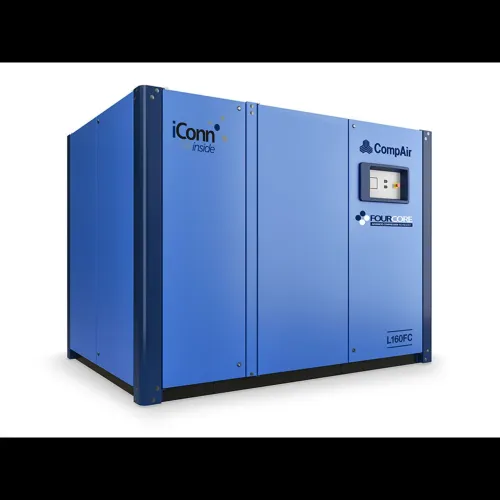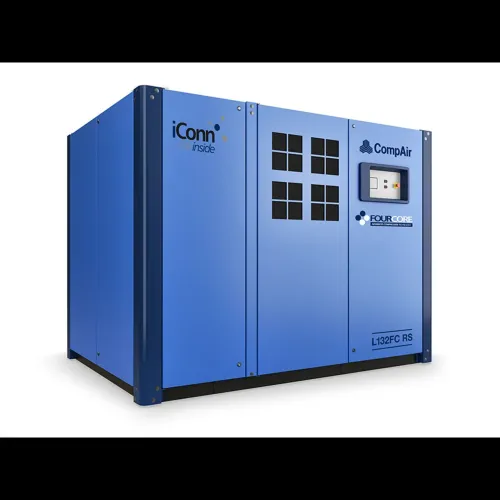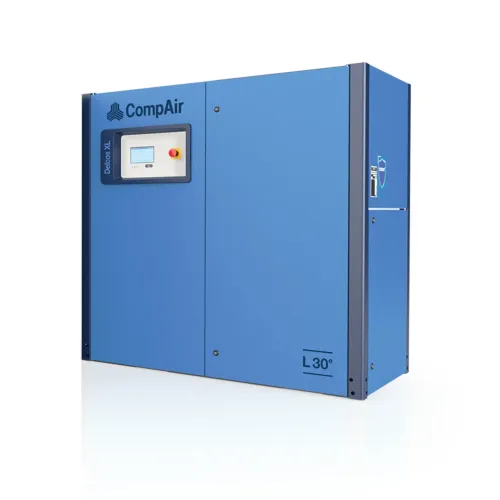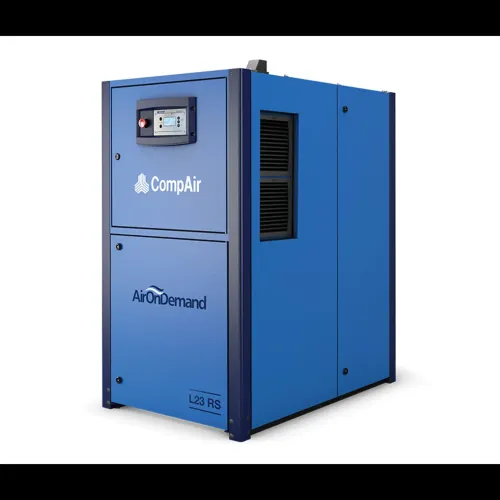
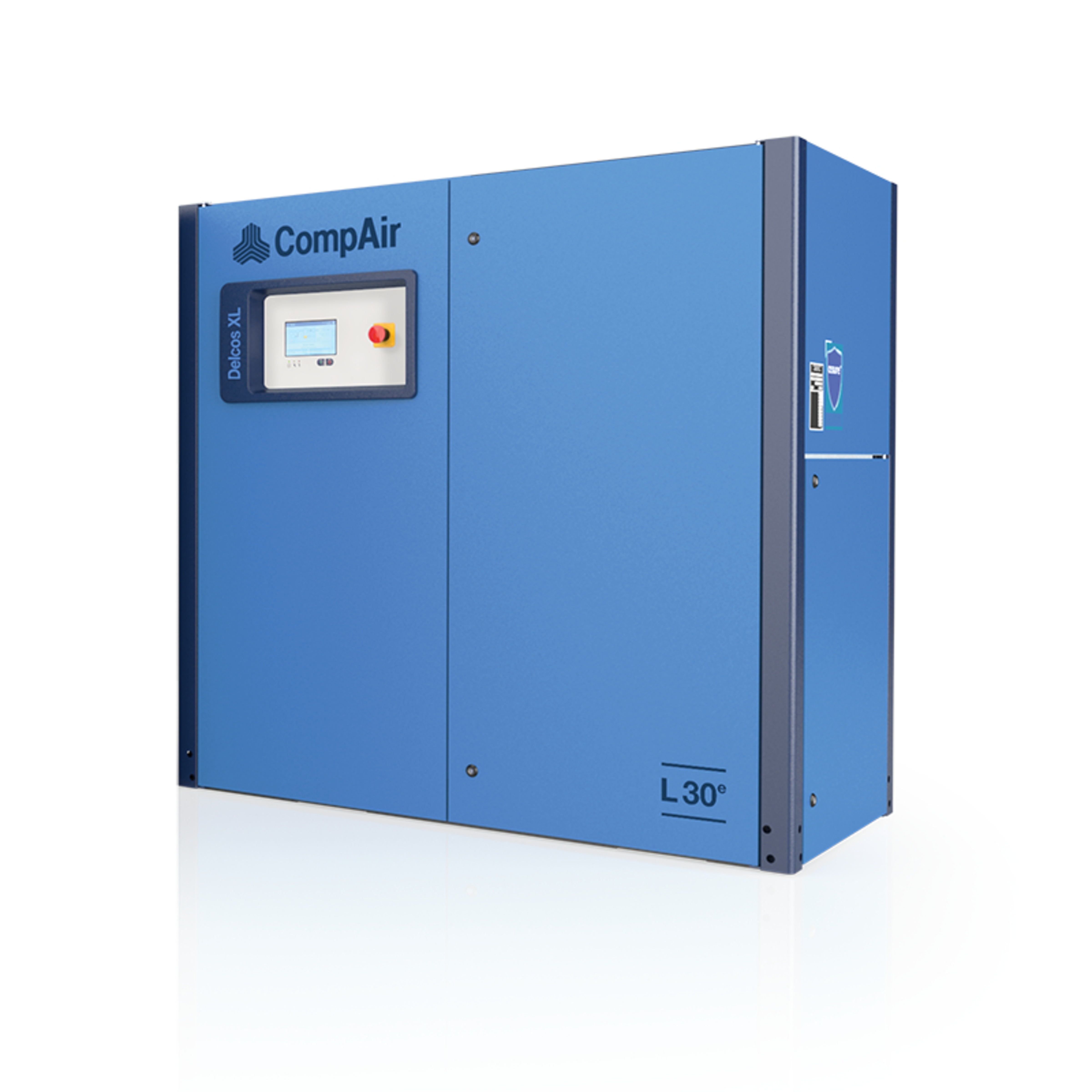
Rotary Screw Air Compressors
Lubricated Rotary Screw Compressor 30 - 45 kW
CompAir Li30-45
The New Generation
Industries across the globe rely on CompAir rotary screw compressors for the supply of high quality compressed air. The CompAir Li series air compressor range incorporates the best of CompAir technology, design and quality. To deliver reliable, economical and efficient performance in a completely new package. The Li series delivers high quality air at volumes at a pressure range between 7 and 10 bar and is available in air cooled versions.
Maximum Durability
We maximise service life and durability by eliminating elastomer and thermoplastic pipe and tube in system pressure lines. Replacing them with corrosion resistant stainless steel tubing and passivated zinc coated carbon steel piping. For ease of maintenance we complete the connection with viton sealed grooved couplings and self sealing high pressure compression fittings.
Designed for Serviceability
Maintenance personnel love the Li series compressor range. Service access is quick and easy with all doors able to be removed in seconds. We’ve also made sure serviceable components including filters are easily accessible and no piping needs to be disconnected to service the separator.
A rotary screw compressor is a type of positive-displacement compressor that delivers continuous compressed air using two intermeshing helical (screw-shaped) rotors.
“Lubricated” means that oil is used:
To cool
To lubricate the rotors
To seal clearances for better compression efficiency
This makes them ideal for continuous industrial operation — typically 24/7 duty.
⚙️ 2. How It Works
Air Intake
Ambient air enters through an air filter.
Rotor Meshing
Two helical rotors mesh together; one is driven by the electric motor.
Oil Injection
Oil is injected into the compression chamber — this cools and lubricates.
Compression
As rotors turn, the volume between them shrinks → air is compressed.
Oil/Air Separation
The compressed air + oil mixture goes to a separator.
Output Air
Oil is removed → compressed, cooled, filtered air is delivered.
Oil Recycle
Oil is cooled and reused.
📊 3. Why 30 – 45 kW Is a Common Range
This power range corresponds to approx. 40 – 60+ HP, a sweet spot for:
✔ Large workshops
✔ Manufacturing plants
✔ Injection molding, CNC lines
✔ Pneumatic conveying
✔ Heavy-duty machining
✔ Automotive service stations
30 kW ~ good for mid-sized industries
45 kW ~ higher flow / multiple tool banks
📌 4. Typical Performance Metrics
Parameter Typical Range
Motor Power 30 – 45 kW
Airflow (Free Air Delivery) ~4 – 15 m³/min (150 – 530 CFM)
Pressure 7 – 13 bar (100 – 190 PSI)
Duty Cycle 100% (Continuous operation)
Outlet Temp ~80 – 100 °C before aftercooler
Noise Level ~70 – 85 dB
🚀 5. Key Features & Options
🧰 Standard Features
✔ Heavy-duty electric motor
✔ Oil injection & oil separator
✔ Air and oil cooler
✔ Automatic drain valves
✔ Safety shutdowns (over temp / pressure)
✔ Air/oil filtration
🔄 Optional Features
Feature Benefit
VSD (Variable Speed Drive) Saves energy by matching motor speed to demand
Aftercooler Reduces air temperature and removes moisture
Air Receiver Tank Stabilizes pressure & reduces cycling
Dryers (Refrigerated/Desiccant) Removes moisture → improves quality
Advanced Control Panel (PLC) Monitor pressures, temps, service intervals
Remote Monitoring IoT connectivity & alerts
💡 6. Advantages of Lubricated Rotary Screw Compressors
✅ High Efficiency
Continuous compression → better than piston compressors for steady demand.
✅ Long Life & Reliability
Oil lubrication drastically reduces wear.
✅ Lower Noise
Typically quieter than piston (reciprocating) compressors.
✅ Smooth Air Delivery
Constant flow — ideal for CNC and critical processes.
✅ Lower Maintenance Hours
Fewer moving parts than reciprocating types.
🧮 7. Compressor Components (Detailed)
🔹 Air Inlet Filter
Removes dust → protects rotors.
🔹 Airend (Rotor Assembly)
Heart of compressor — optimized for efficiency.
🔹 Oil Separator Vessel
Separates lubrication oil from compressed air.
🔹 Coolers
Reduce oil & discharge air temperature.
🔹 Control Panel
Displays pressures, temperatures; auto protections.
🔹 Valves & Sensors
Ensure safe operation & pressure regulation.
🧠 8. Choosing the Right Model — What to Check
📌 Air Demand
Determine flow in m³/min or CFM required by tools/processes.
📌 Operating Pressure
Typical industrial pressure:
Light tools: 7–8 bar
Heavy machinery: 8–13 bar
📌 Environment
Heat/humidity affects cooling needs.
📌 Duty Cycle
If running constantly, prioritize robust cooling and filtration.
📌 Energy Efficiency
VSD pays back with lower power bills.
🧪 9. Air Quality & Moisture Control
Compressed air can condense moisture — quality matters:
Levels of Air Treatment:
Basic filtration
Aftercooler + water separator
Refrigerated air dryer
Desiccant dryer (for very dry air)