Compressed Air Treatment
Compressed Air Filtration
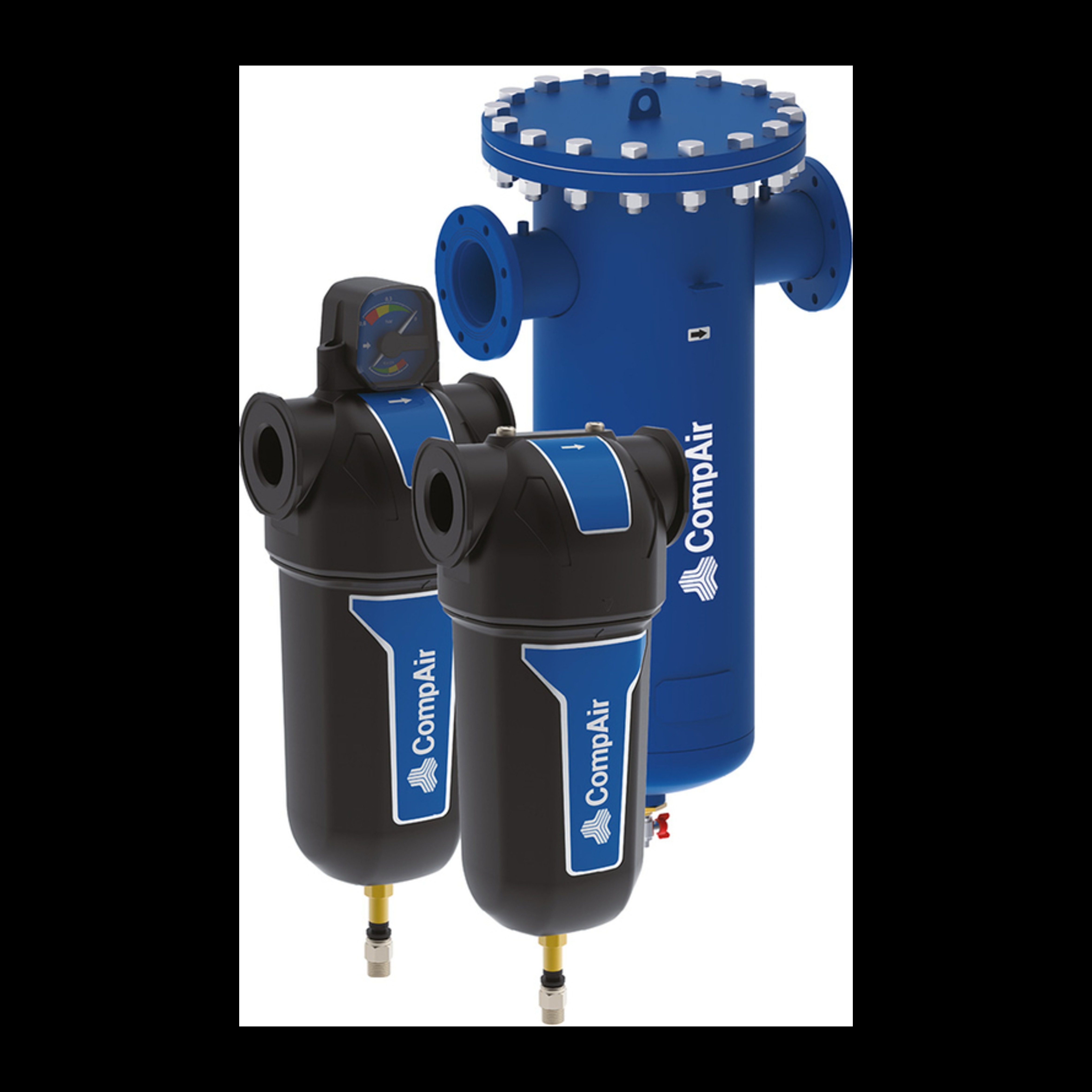
High Temperature Filter from CompAirHigh Temperature Compressed Air FilterCompAir air filter family
A filter range to rely on
The reliability of compressed air filtration is paramount to the ongoing fight against problems caused through contamination entering the air system. The CompAir filter range has been constantly innovated and has become a leading technology, providing the exact balance between air quality, energy efficiency and low lifetime costs.
The reliability of compressed air filtration is paramount to the ongoing fight against problems caused through contamination entering the air system. Contamination in the form of dirt, oil and water can lead to:
Pipe scale and corrosion within pressure vessels
Damage to production equipment, air motors, air tools, valves and cylinders
Premature and unplanned desiccant replacement for adsorption dryers
Spoiled product
The CompAir filtration range offers various products and grades of filtration to provide peace of mind whatever the air quality requirement. To meet the various requirements, CompAir filters are available in three different grades:
Type B: General Purpose Protection. It provides particle removal down to 1 micron, including water and oil aerosols.
Type C: High Efficiency Oil Removal Filtration & High Efficiency Dust Filtration. Particle removal is down to 0.01 micron, including water and oil aerosols.
Type D: Oil vapor and hydrocarbon odor removal, providing a maximum remaining oil content of <0.003 mg/m
Type E - General Purpose Dust Filtration, dust particle removal down to 1 micro
Innovative features mean outstanding performance without compromise. With differential pressure that starts low and stays low, these filters offer a solution to applications that demand high performance filtration without the usual high energy running costs. The CompAir filter range provides clean, high-quality air as defined by ISO 8573.1:2010 and are certified by a third party under ISO 12500-1.
Compressed air treatment refers to the complete process of preparing compressed air so it is clean, dry, and suitable for use in industrial applications.
Compressed air straight from a compressor contains:
Moisture (water vapor and condensate)
Oil (from lubricated compressors)
Dust and solid particles
Microorganisms (in some environments)
Main Components of Compressed Air Treatment:
Aftercooler – Cools air to remove bulk moisture
Air Dryer – Removes water vapor
Refrigerated dryers
Desiccant (adsorption) dryers
Membrane dryers
Filters – Remove particles, oil, and contaminants
Condensate Drains – Remove collected water
Oil-Water Separators – Treat condensate before disposal
👉 In short: Compressed air treatment is the entire purification system.
2️⃣ Compressed Air Filtration
Compressed air filtration is a part of compressed air treatment. It specifically focuses on removing solid particles, oil aerosols, and contaminants from compressed air.
Common Types of Compressed Air Filters:
Particulate Filters
Remove dust, rust, scale
Usually 1–5 microns
Coalescing Filters
Remove oil aerosols and very fine particles
Can filter down to 0.01 microns
Activated Carbon Filters
Remove oil vapors and odors
Used in food, pharma, breathing air systems
👉 Filtration = cleaning the air from solid and oil contaminants.
Key Difference
Compressed Air Treatment Compressed Air Filtration
Complete air preparation system One step within treatment
Includes drying, cooling, draining Focuses only on removing particles & oil
Ensures correct air quality level Ensures contaminant removal
Why It Matters
Proper air treatment and filtration:
Protect pneumatic equipment
Prevent corrosion in pipelines
Improve product quality (especially in food, pharma, electronics)
Reduce maintenance costs
Ensure compliance with ISO 8573 air quality standards
If you'd like, I can also provide:
A simple system layout diagram explanation
ISO 8573 air quality classes
Product comparison guidance
Content rewritten for a website or catalog