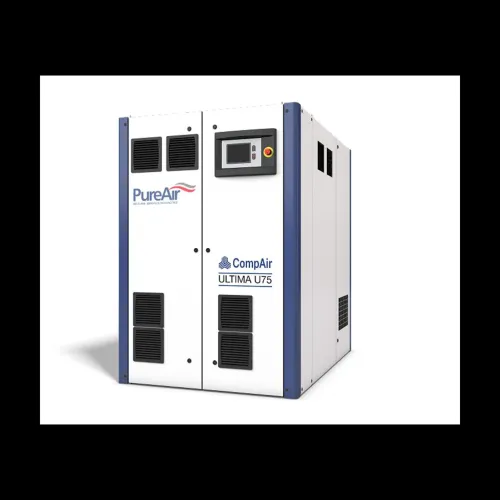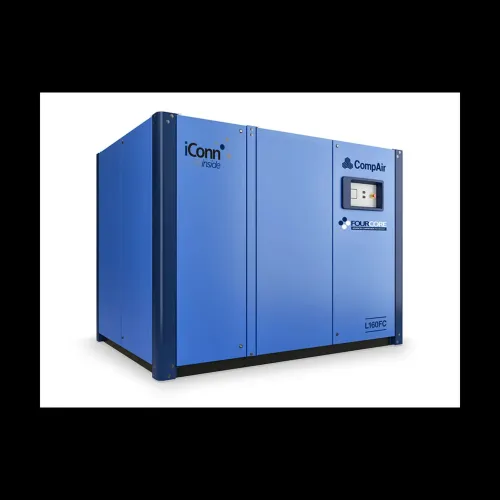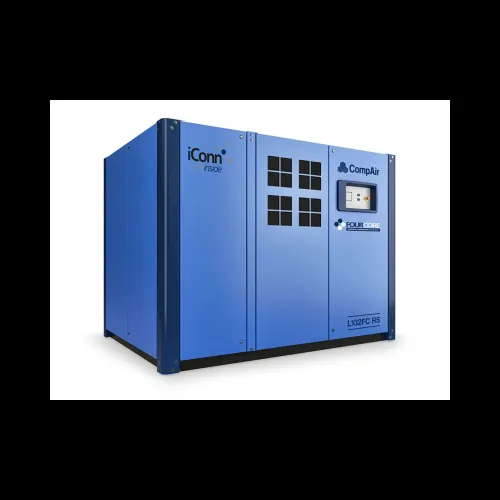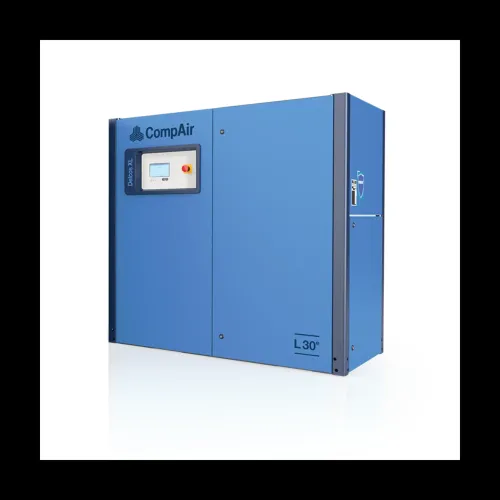
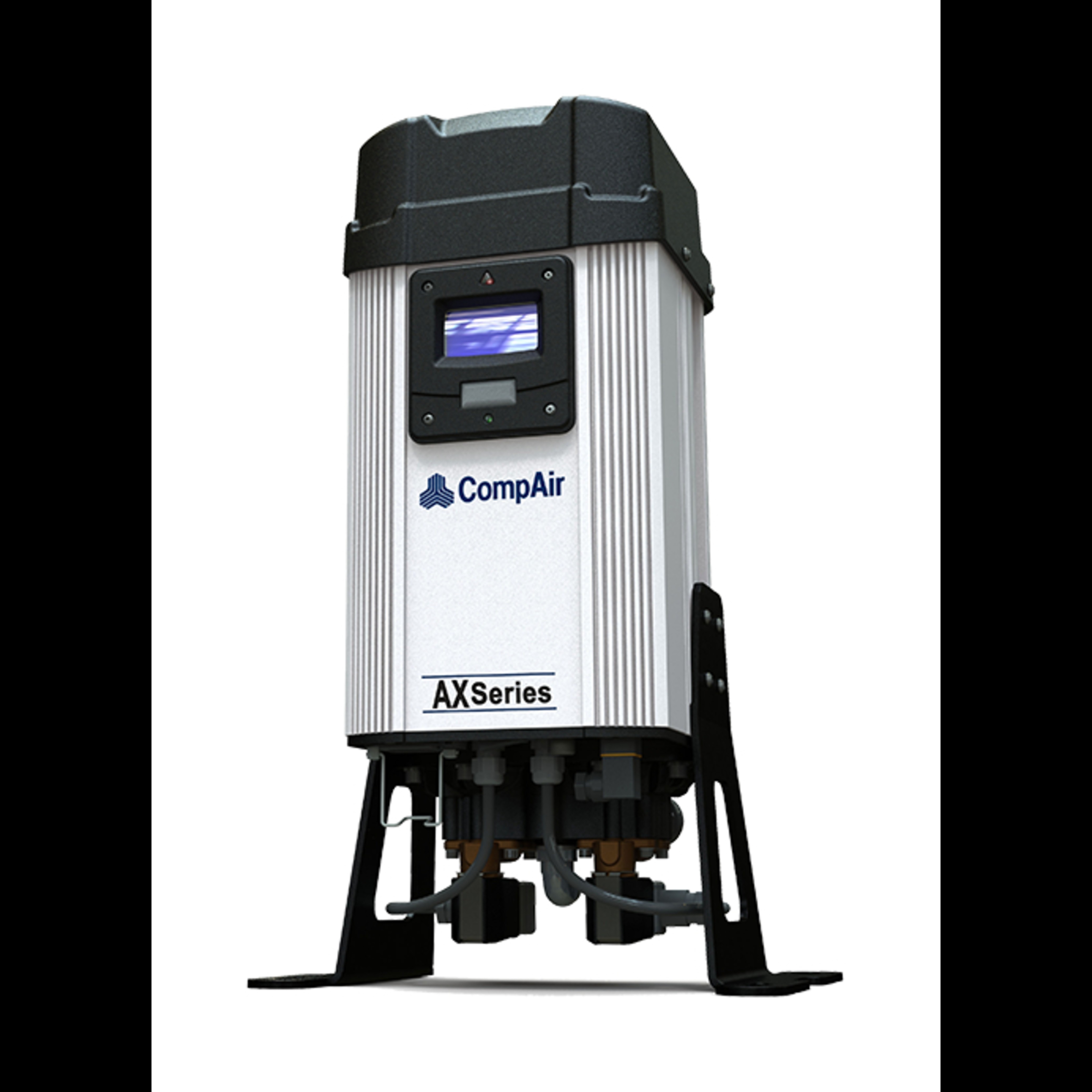
Desiccant Air Drying Technologies
Heatless Modular Adsorption Dryers
At the heart of any compressed air treatment solution is the dryer, it’s purpose, to remove water vapour, stop condensation, corrosion and in the case of adsorption dryers, inhibit the growth of micro-organisms. CompAir dryers have been 100% function and performance tested at our plant in Fogliano, Italy to ensure the highest standard of performance, delivering compressed air purity in accordance with ISO8573-1.2010, Class 2 dirt (1 micron) and Class 2 water (-40°C pressure dew point).
Features
High efficiency moisture removal and reliable operation with PLC controlled solenoid valves
Integral volumetric flow limiter prevents overflow ensuring consistent dew point performance
Unique exhaust air silencers significantly reduce noise levels
Energy saving dew point monitoring can save up to 60% during reduced inlet moisture loading
A clear digital display provides a full view of PLC operation and monitoring data
100% leak, function and dew point performance tested
The compact design allows installation in spaces too small for a traditional dryer easy to maintain
Convenient service kits for easy and efficient maintenance
Desiccant air drying is a process to remove moisture (water vapor) from compressed air by using a desiccant material — a substance that adsorbs (binds) water vapor onto its surface.
Moisture in compressed air can cause problems such as:
Corrosion in piping and equipment
Freeze-ups in cold environments
Reduced performance in pneumatic instruments
Product quality issues in manufacturing
Desiccant dryers are used where very low dew points (e.g., −40°C to −70°C or lower) are required.
📌 2. Types of Desiccant Dryers
There are mainly three categories:
Type Regeneration Method Typical Dew Point
Heatless (Pressure Swing) Uses dry purge air −40°C to −73°C
Heated (External or Internal) Heater-assisted purge −40°C to −100°C
Heat of Compression (HOC) Uses compressor heat −40°C to −70°C
Your focus — Heatless Modular Adsorption Dryers — falls in the first category.
📌 3. Heatless Adsorption Dryers: How They Work
🔹 Basic Principle
A heatless desiccant dryer uses two vessels (towers) filled with adsorbent (commonly activated alumina or silica gel).
Adsorption Phase: One tower dries the compressed air. Moisture sticks to the desiccant.
Regeneration Phase: The other tower is regenerated (moisture removed) using a portion of already dried air (purge air).
🔹 Pressure Swing Adsorption (PSA)
Drying happens at high pressure
Regeneration happens by depressurizing and purging with dry air
During regeneration typically 10–15% of dry air is used as purge
🔹 Cycle
The dryer continuously switches towers:
➡ Tower A: Drying
⬅ Tower B: Regenerating
Then they switch, often controlled by a timer or dew-point sensor.
Modular design means:
✔ Plug-and-play construction
Pre-packaged skid units
Easy installation and commissioning
✔ Scalable capacity
Modules can be added to increase flow capacity
Great for expansions or phased installation
✔ Standardized components
Simplified maintenance
Interchangeable parts
✔ Redundancy & flexibility
Multiple modules provide continuous uptime even during service
Load balancing between modules
📌 6. Performance Metrics
🔸 Pressure Dew Point (PDP)
Indicates how dry the air is:
Typical heatless dryers: −40°C to −73°C
Some specialized designs go lower
🔸 Purge Loss
Percentage of dry air used for regeneration:
Usually 8% to 15%
Modular designs may optimize purge efficiency
🔸 Flow Capacity
Rated in Nm³/min, SCFM, or m³/hr.
🔸 Pressure Drop
Affects compressor load — modular designs often aim to minimize this.
📌 7. Pros & Cons of Heatless Modular Dryers
✅ Advantages
✔ No external heat source required
✔ Simple design → low capital cost
✔ Reliable with minimal moving parts
✔ Easy scaling via modules
✔ Excellent for very low dew point need
❌ Limitations
⚠ Purge loss reduces overall system efficiency
⚠ Not ideal for humid climates without pretreatment
⚠ Desiccant replacement required periodically
📌 8. Typical Applications
Heatless modular desiccant dryers are used where:
Extremely dry air is needed
Intermittent or variable demand exists
Redundancy and uptime are crucial
Industries:
Pharmaceuticals
Electronics & semiconductor fabrication
Paint spray booths
Instrumentation air
Food & beverage packaging
Natural gas dehydration
📌 9. Design & Selection Tips
Consider:
Required Dew Point
Depends on process needs
Inlet Air Quality
Pre-filter and water separators reduce load
Operating Pressure
Higher pressure reduces purge percentage
Flow Variability
Modular units handle peaks better
Space & Maintenance Access
Modular units often have smaller footprints
📌 10. Maintenance Overview
Routine tasks include:
Changing pre-filters/coalescers
Checking valves and solenoids
Monitoring dew point
Replacing desicca